Enhancing the scientific capacity of tubitak mrc in the field of smart environmental technologies for climate change challenges
The SMAR4ENV project which will be stimulating scientific excellence in key applications of Smart Environmental Solutions for the mitigation and adaptation to climate change of Turkish economy is underway.
Led by the TUBITAK MRC and with a budget of 1,5 M €, it will contribute to improve R&I capacities to strengthen, scientific reputation, attractiveness and networking channels while stimulating scientific excellence in key applications of Smart Environmental Solutions for the mitigation and adaptation to climate change of Turkish economy.
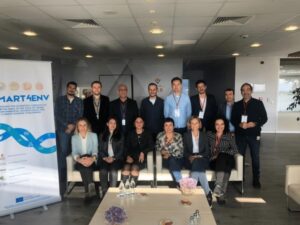
Gebze Kocaeli – Turkiye – An international consortium of 6 partners from 6 countries, led by the Tubitak MRC, has joined forces to address, during next 36 months, the challenges of increasing scientific and technical capacity, support TUBITAK MRC’s institutional networking and international reputation, while developing a knowledge transference framework to increase the knowledge of national stakeholders on available Smart Environmental Solutions, promoting their use, enabling application of innovative approaches and solutions, sharing knowledge and best practices
SMART4ENV intends to address climate change by using Smart Environmental Solutions to strengthen institutional structures to understand and address the protection of environmental resources quality and quantity, development of monitoring and evaluation tools and establishment of databases. Besides, SMART4ENV will allow to conduct research, assessment, and dissemination of impacts of climate change on environmental resources, innovative alternative Smart Environmental Solutions that increase adaptation capacity to climate change and integrating the results into environmental resource planning studies. Insofar, SMART4ENV will promote efficient environmental resources management to update processes in agriculture, reducing water losses, developing irrigation and water management systems specific to local conditions, and ensuring use of new Smart Environmental Solutions for irrigation and water management.
Such aims will be addressed through a three pillars structure, to assess current capacities and capabilities, plan sustainability actions to improve viable institutional networking and collaboration and a continuous outreach and stakeholder-oriented events following the implementation of project communication and dissemination strategy. The methodology to be applied throughout SMART4ENV is evidence based and builds on a comprehensive set of implementation activities by specific case studies. These case studies consider digital environmental management, online and smart tools for monitoring and management, visualization techniques, sensors, and IT solutions for environmental resources management, reduced carbon emission, issuing early warnings to the population and improving existing prediction models, monitoring practices and long-term environmental stewardship.
As a result of project developments and outcomes, different types of impacts are expected, including an enlarged community of competitive prestigious researchers, stronger and better-connected to a core of international and relevant R&I system, supported by skilled R&I managers with their international networks. Such critical mass of regional stakeholders will be clustered around TUBITAK MRC to establish strategic alliances and collaborative activities do address Green Deal challenges, while improving environmental quality, public health, improved customer experience and communication. Besides, SMART4ENV will be on a position to contribute for a better mitigation and adaptation to climate change because of new Smart Environmental Solutions for intelligent, connected, and responsive environmental services and a more sustainable use of water and resilient treatment systems with stable effluents quality.
The knowledge generated by SMART4ENV is expected to increase the pace of technology transition (of services, products, etc.) to commercialization and support a significant impact on the regional economy within the next decade, thanks to the expected development of an innovative Smart Environmental Solutions industry and the profitability of regional companies through new product development, process improvements, innovation support, and the increase of labour market participation, thanks to job creation and new opportunities.
ABOUT THE CONSORTIUM
The SMART4ENV project includes a partnership of 6 institutions from 6 countries: TUBITAK Marmara Research Center Environment and Cleaner Production Institute (Turkey), Università Politecnica delle Marche (Italy), Fundación Universitaria Balmes (Spain), Sustainable Innovation Technology Services (Ireland), Norwegian University of Life Sciences (Norway).
With reference GA. 101079251, the SMART4ENV project is funded by the EU under the Horizon Europe Programme, with a total budget of ¤€1,499,418.00
The SITES’s role
As a Work Package leader for Dissemination Communication and Networking and contributing to the WP2 Definition of the multidisciplinary research programme, summer schools and MOOCs, WP5 for Sustainability strategy and clustering plan
Project NEWS:
- SITES Celebrating with the attractive SMART 4 ENV First Newsletter Launched
- SITES in Collaborative Mission to Save the Mediterranean Against Climate Change. 🌊💪
- SMART4ENV FIRST SUMMER SCHOOL FOR RESEARCHERS, MS AND PHD STUDENTS
- STAKEHOLDERS ‘INNOVATION WEEK – Smart4env
- SMART4ENV MOBILITY IN ITALY HAS STARTED SUCCESSFULLY
- SITES: Celebrating SMART4ENV Innovation Week


SEAlgaePower
SEAlgaePower – Transforming Aquaculture Waste into Sustainable Microalgae Solutions
SEAlgaePower is an EU-funded research and innovation project that converts nutrient-rich wastewater from aquaculture and seafood processing into valuable microalgae-based ingredients. By cultivating carefully selected marine microalgae directly in these waste streams, the project simultaneously cleans the water and produces high-quality biomass rich in proteins, omega-3 oils, pigments, and polysaccharides.
Through laboratory screening, pilot-scale cultivation, and advanced biorefinery methods, SEAlgaePower develops sustainable ingredients and prototypes for:
-
Food & functional ingredients
-
Aquaculture feed rich in omega-3
-
Nutraceutical and pharmaceutical extracts
-
MedTech materials for wound care & regenerative medicine
-
Bio-based fertilizers
Comprehensive environmental, social, and economic assessments ensure every solution is sustainable, circular, and suitable for real-world adoption.
SITES leads project communication, stakeholder engagement, socio-economic evaluation, value-chain circularity assessment, and exploitation strategy—supporting visibility, impact, and long-term application of SEAlgaePower outcomes.
Start date: 31 August 2025
Duration: 3 years
Total budget: €3,008,028
project website: https://www.sealgaepower.eu/


Sargassum Bioeconomy: From Coastal Biomass to Advanced Sustainable Materials
SARGEX
SARGEX (Sargassum Bioeconomy) is a Horizon Europe Marie Skłodowska-Curie Actions (MSCA) Staff Exchanges project designed to transform one of the world’s most pressing environmental challenges—massive Sargassum seaweed blooms—into a long-term opportunity for sustainable development, renewable energy, and circular bio-economy innovation.
Rising sea temperatures, shifting ocean currents, and nutrient loading have intensified Sargassum proliferation, creating ecological, economic, and social threats to coastal regions worldwide. SARGEX responds to this emerging crisis by developing scalable, eco-friendly, and zero-waste valorisation pathways that convert Sargassum biomass into high-value bioinputs, functional materials, and renewable energy solutions.
Project Objectives
Technological & Research Objectives
-
O1: Develop sustainable Sargassum collection and processing protocols with >95% efficiency.
-
O2: Create innovative agricultural bioinputs (biostimulants, biofertilizers) enriched with Sargassum-derived nutrients, natural zeolites, and encapsulated microorganisms, achieving a 20% productivity increase in field trials.
-
O3: Design and build a modular pilot plant with an integrated biodigester (250 L capacity) producing bioinputs and biogas.
-
O4: Validate cost-effectiveness, scalability, and reduce CO₂-equivalent emissions by 15%.
-
O5: Advance technologies to TRL 6, preparing them for commercial evaluation.
MSCA Staff Exchange Objectives
-
O6–O12: Strengthen interdisciplinary cooperation, enhance innovation transfer, train staff, deliver workshops, engage civil society, and disseminate results to over 1,000 stakeholders.
Project Description
SARGEX addresses the growing global challenge of Sargassum “golden tides,” which threaten biodiversity, fisheries, tourism, and coastal health. By building on advanced extraction, bioprocessing, and valorisation methods, the project transforms this invasive biomass into:
-
Agricultural bioinputs (biostimulants, biofertilizers)
-
Encapsulated microbial formulations
-
Bioactive compounds for functional applications
-
Biogas through anaerobic digestion
-
Sustainable materials for broader use
The project adopts a zero-waste circular economy model, integrating modular pilot plants, biodigesters, and sustainable harvesting techniques. Multi-omics, advanced analytics, and cross-sector R&I support the development of new materials and agricultural solutions while ensuring environmental safety and economic scalability.
Consortium Partners
Academic & Research Partners
-
Universitat Autònoma de Barcelona (UAB) – Coordinator
-
Università degli Studi di Napoli Federico II (UNINA)
-
University of Antwerp (UANTWERP)
-
ICIMAR – Instituto de Ciencias Marinas
-
EEPFIH – Escuela Experimental de Producción de Flora y Fauna
Industry & Innovation Partners
-
SITES (Sustainable Innovation Technology Services Ltd)
-
AERIS Tecnologías Ambientales
-
BET – Blue Economy Technologies
-
FUH – Fundación Universitaria Hispanoamericana
Together, they bring expertise in marine ecology, biotechnology, process engineering, bioenergy, agricultural sciences, innovation management, and communication.
Project Budget and Duration
-
Programme: Horizon Europe – MSCA Staff Exchanges
-
Proposal ID: 101236659
-
Duration: 48 months
-
Start: January 2026
-
End: December 2029
SITES Role in SARGEX
SITES holds a central role in the project across innovation, exploitation, communication, and stakeholder engagement.
Key Responsibilities
-
Lead WP4 – Exploitation of Products and Processes
-
Identify end-users and market segments.
-
Conduct socio-economic assessment and cost-benefit analyses.
-
Build commercialization strategies for bioinputs and pilot plant technologies.
-
Support SMEs in adopting new technologies.
-
-
Lead WP5 – Dissemination, Communication & Networking
-
Develop and manage the project’s full communication and dissemination plan.
-
Engage policymakers, industry, civil society, and academic audiences.
-
Organize international workshops, outreach events, and multi-actor dialogue.
-
Coordinate branding, visual identity, and stakeholder visibility.
-
-
Participate in Staff Exchanges
-
Contribute expertise in circular economy, innovation management, and policy.
-
Train secondees in communication, knowledge transfer, and exploitation.
-
SITES is the innovation bridge in SARGEX—ensuring that scientific results evolve into market-ready, socially-accepted, and sustainable solutions.
Impact
SARGEX contributes directly to EU priorities such as:
-
The European Green Deal
-
The Circular Economy Action Plan
-
The EU Bioeconomy Strategy
-
The EU Algae Initiative
-
The EU Biodiversity Strategy 2030
Through innovative Sargassum valorisation, the project is expected to:
-
Reduce coastal clean-up costs by up to €300M annually.
-
Produce 20 m³ of biogas per ton of biomass.
-
Create sustainable opportunities for SMEs and coastal communities.
-
Advance Europe’s position as a global leader in marine biomass innovation.
project News
- SARGEX Kick-off Meeting
-